593IA EVOLUTIVA · FLAGSHIP PRODUCT · $149
MIR assesses your scientific paper with four AI agents working over a RAG index of your own manuscript, and adds the review of a PhD specialist in your field. You receive a professional report with the exact diagnosis and a prioritised correction plan, before you submit to an indexed journal.
Only need the diagnosis? MIR Lite delivers the assessment by 4 AI agents with RAG over your manuscript, no reviewer, in 48 hours for $69. Compare the three services →
THE PROBLEM
Most rejections in indexed journals don't happen because of the quality of the research, but because of avoidable weaknesses: unclear structure, poorly reported methodology, the wrong journal, weak academic writing, or a mismatch with the editorial board's criteria. When these signals are caught after rejection, months of work have already been lost.
Talk to a specialistWHAT IS MIR
Manuscript Intelligence Report (MIR) assesses how ready a manuscript is before submission to indexed journals. It combines two layers: four AI agents that analyse your text through a RAG index built over it — so every observation is anchored to a specific, verifiable section — and a specialist holding a doctorate in your field, who contrasts that diagnosis against the real practices of your discipline and turns it into a prioritised correction plan. MIR is the second step of the Academia vertical: above it sits editorial support through to publication, and below it MIR Lite, which delivers the AI layer alone.
HOW IT WORKS
Share the document in whatever state it's in: an advanced draft, a near-final version, or a manuscript that was already rejected and you want to fix.
Four agents analyse structure, method, evidence, rejection risks, editorial fit and integrity, working over a RAG index of your own manuscript. A specialist holding a doctorate in your field then validates the findings and adds the judgement of your discipline.
Within 48-72 hours you get a professional report with the complete diagnosis, risks, strengths, and actionable recommendations.
You apply the correction plan, choose the journal with the report's guidance across regional databases, Scopus and WoS, and submit your manuscript ready to go. If you would rather the support continued through to the editorial decision — journal selection, submission and reviewer responses — that stage is the Scopus Premium Program.
WHAT IT ANALYZES
These are the six dimensions the four AI agents assess over the RAG index of your manuscript. On top of them, the PhD reviewer adds the judgement of your field: academic writing, terminological precision and fit with the style of the journals they publish in themselves. That second layer is the difference between MIR Lite and MIR.
Whether the research question, theoretical framework, results and conclusions hold the same line from start to finish.
Whether a third party could repeat your study using only what is written in the methods section.
Coverage, currency and relevance of the cited literature against what your field demands today.
The specific points a reviewer would flag, ordered by their likelihood of causing a desk rejection.
How aligned your text is with the scope, style and article type published by the candidate journals.
Internal consistency of the data, conflict-of-interest disclosure, ethical aspects and compliance with reporting standards.
WHAT YOU GET
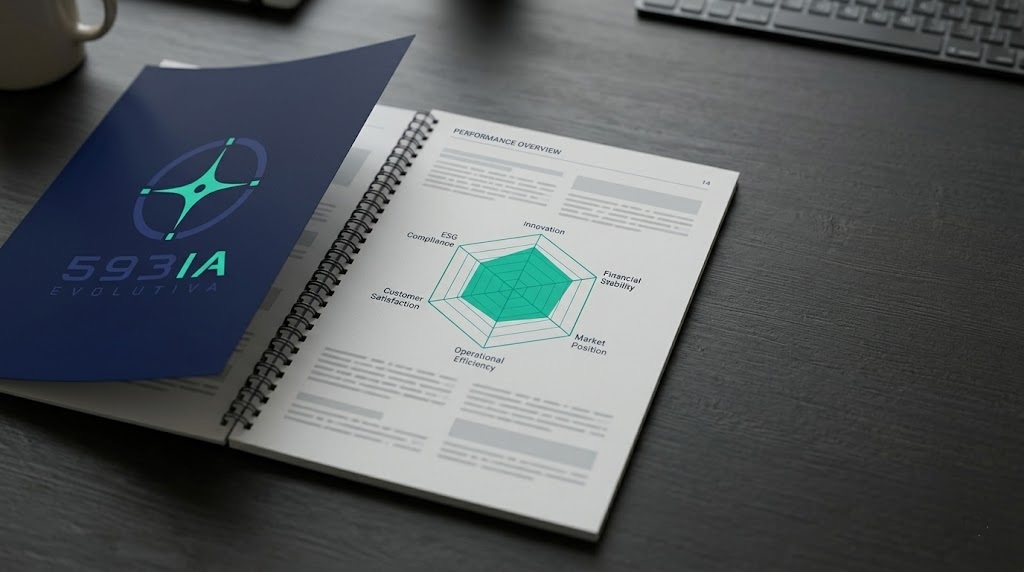
While the final report design may vary, here's what researchers find inside their MIR:
Manuscript identification and a summary of the evaluation's scope.
Clear navigation through each section of the diagnosis.
An overview of the manuscript's readiness.
A visualization of performance across each dimension analyzed.
Specific points that could lead to rejection.
Elements of the manuscript that already meet the expected standard.
Specific, prioritized actions to strengthen the manuscript.
Guidance on the journal tier the manuscript could realistically aim for.
If we support you through your publication process and the journal does not accept you within the agreed timeframe, we keep working with you at no additional cost until it happens.
COMPARISON
| Blind submission | MIR Lite · $69 | MIR · $149 |
|---|---|---|
| ✕No prior diagnosis at all | ✓4 AI agents with RAG over your manuscript | ✓The same 4 AI agents with RAG |
| ✕No expert judgement before submitting | ✕No human reviewer | ✓PhD reviewer in your field |
| ✕Months until the journal replies | ✓48 hours | ✓48-72 hours |
| ✕A rejection letter with no detail | ✓Risk map, section by section | ✓Full report and prioritised correction plan |
| ✕Journal selection by trial and error | ✓General guidance by profile | ✓Candidate journals by quartile and scope |
| ✕Starting over after rejection | ✓You can move up to MIR, deducting what you paid | ✓You can continue to the Scopus Premium Program |
WHO MIR IS FOR
Prepare every paper before putting it in front of the editorial board.
Bulletproof the publications that support your academic rank.
Walk into your thesis defense backed by an expert review.
Avoid letting an avoidable rejection delay your graduation.
Standardize your whole team's editorial quality before submitting.
Raise your institution's acceptance rate in indexed journals.
FREQUENTLY ASKED QUESTIONS
MIR evaluates manuscripts in Spanish and English and adapts to different fields, adjusting its review criteria based on the manuscript's discipline.
No. MIR is a pre-submission evaluation, designed to strengthen the manuscript before it enters the journal's formal editorial process.
The full report is delivered within 48 to 72 hours of receiving the manuscript.
MIR is useful in that scenario too: it helps identify what weaknesses caused the rejection and what to fix before trying again.
MIR costs $149 per manuscript, as a one-time payment. MIR Lite costs $69 and delivers the assessment by 4 AI agents with RAG over your manuscript, with no reviewer, in 48 hours. The difference is the second layer: in MIR, a specialist holding a doctorate in your field reviews that diagnosis, contrasts it against the practices of your discipline and turns it into a correction plan prioritised section by section, with candidate journal recommendations.
That is the next stage: the Scopus Premium Program covers journal selection by quartile, format adjustment, the cover letter and reviewer responses in every round. It runs on demand and its scope depends on the target quartile and on the availability of PhD specialists in your field, so it is quoted case by case after an initial consultation at no cost. You can see it on the Academia vertical page.
Scopus® is a registered trademark of Elsevier B.V. and Web of Science™ of Clarivate. 593IA Evolutiva is not affiliated with Elsevier, Clarivate or any publishing house, does not sell or broker publication slots, and does not guarantee acceptance of any manuscript: the decision rests exclusively with each journal's editorial committee. Our commitment covers the preparation and support work, under the terms of the published guarantee.
MIR FAMILY
MIR Lite and MIR are available today. The rest of the family is the roadmap of the editorial intelligence ecosystem, still in development: we list it so you know where the product is heading, not as services you can buy now.
Write to us and tell us about your manuscript. We'll confirm whether MIR ($149) is the right step for your case or whether it's better to start with MIR Lite ($69), and explain how to continue.
Request my MIR (WhatsApp)